BPD is one of the most misdiagnosed — and most treatable — conditions we see. You are not difficult. You are undiagnosed.
Borderline personality disorder is not a character flaw, a dramatic personality, or something you can simply decide to stop having. It is a clinically recognized mental health condition characterized by intense emotional experiences, unstable relationships, and a deep, persistent fear of abandonment that shapes nearly every interaction and decision in a person's life.
For most people living with BPD, the disorder went unrecognized for years — sometimes decades. They were labeled as “too sensitive,” “too intense,” or “too much.” Relationships fell apart without a clear explanation. Emotions that others seemed to regulate effortlessly felt completely overwhelming and impossible to control. And somewhere along the way, many turned to substances — alcohol, pills, or other drugs — not to get high, but to find a moment of stillness in a mind that never seemed to quiet down.
That is the reality of BPD — and it is exactly what My2Cents Recovery is built to treat. Our clinical team specializes in borderline personality disorder treatment that addresses both the BPD itself and any co-occurring substance use disorder simultaneously. Because for people with BPD, treating one without the other has never been enough — and you deserve a program that finally understands that.
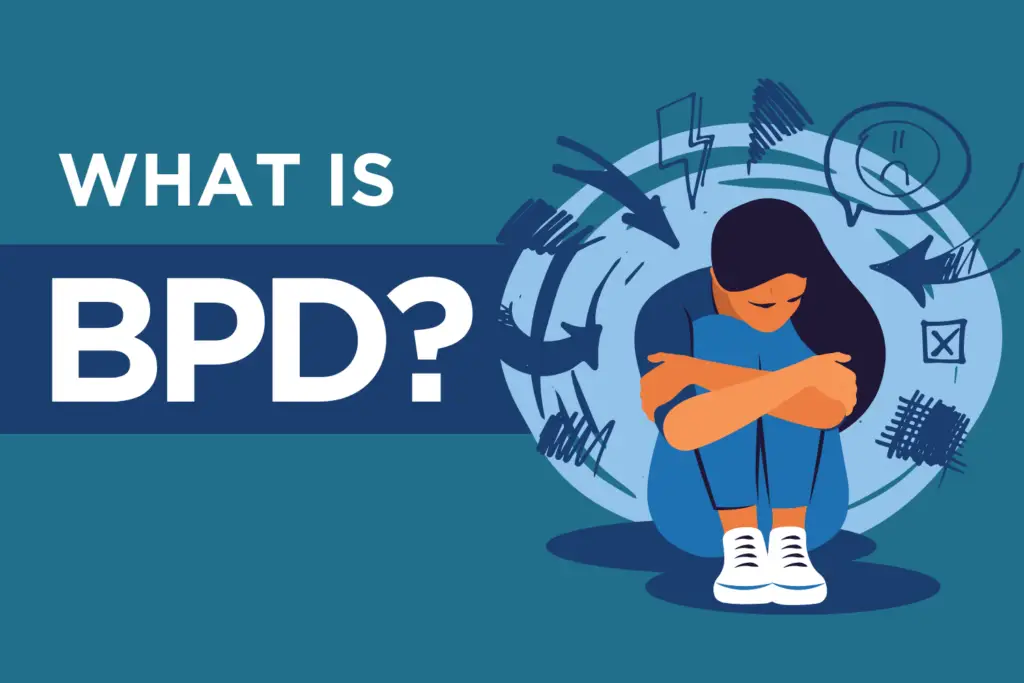
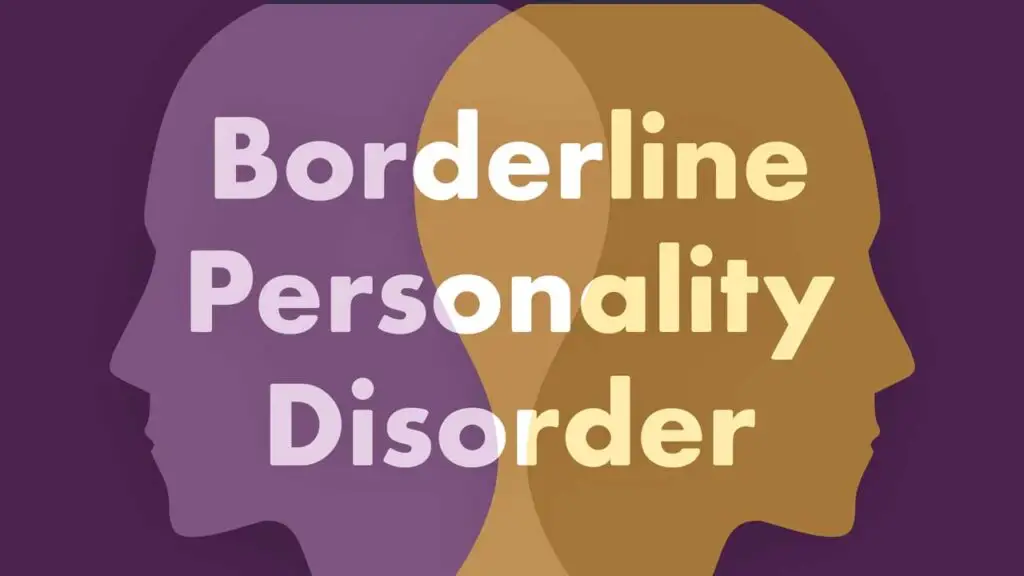
Borderline personality disorder is a mental health condition defined by intense emotional sensitivity, unstable self-image, turbulent relationships, and an overwhelming fear of real or imagined abandonment. It is classified in the DSM-5 under personality disorders — not because it defines someone's personality, but because it deeply influences how a person experiences and interacts with the world around them. People with BPD often describe their emotional experience as living without skin — feeling everything more intensely than others, for longer than others, with far less ability to return to baseline.
BPD affects an estimated 1.6% to 5.9% of the general population — yet it remains one of the most underdiagnosed and misdiagnosed conditions in mental health. It is frequently mistaken for bipolar disorder because of its mood instability, for depression because of its episodes of deep hopelessness, and for PTSD because of its roots in early trauma and abandonment. The difference is in the pattern — BPD mood shifts are typically rapid and triggered by interpersonal events, while bipolar episodes are longer cycling and less tied to relationship triggers.
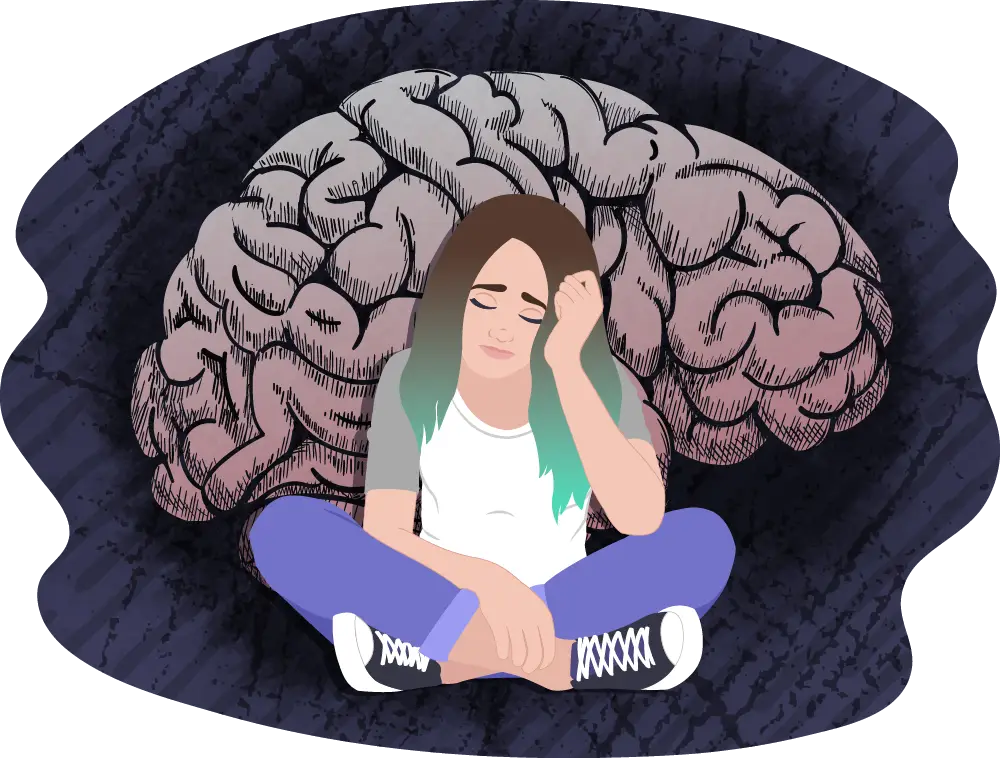
What makes BPD particularly complex — and particularly important to treat correctly — is how deeply it intersects with trauma. The majority of people diagnosed with BPD have a history of childhood trauma, emotional neglect, abandonment, or abuse. The disorder, in many ways, is the nervous system's learned response to an environment where safety and consistency were never guaranteed. Understanding that origin is not just clinically relevant — it is the foundation of compassionate, effective BPD treatment.
At My2Cents Recovery, we treat borderline personality disorder as the primary clinical condition it is — not as a complication of addiction and not as a personality type that needs to be managed. Whether you carry a formal BPD diagnosis or have only recently begun to recognize the pattern in yourself, our clinical team will meet you with the understanding this condition deserves and build a treatment plan around the full picture of who you are and what you are carrying.
BPD is not who you are — it is a condition you have. And that distinction changes everything.
Want to understand how BPD connects to other mental health conditions we treat?
According to the DSM-5, a BPD diagnosis requires at least 5 of these 9 symptoms — but even one of them can make daily life feel unmanageable.
The clinical criteria for borderline personality disorder are not cold checkboxes — they are descriptions of real, daily experiences that millions of people have been living with, often without a name for what they are going through. Reading through these symptoms is not an exercise in labeling yourself. It is an opportunity to finally recognize a pattern that has shaped your life — and understand that it has a clinical explanation, a clinical name, and a proven path to treatment.
People with BPD experience a profound, often terrifying fear of being left — by partners, friends, family, or therapists — whether that abandonment is real or simply perceived. This fear drives frantic efforts to avoid separation, including emotional outbursts, impulsive behavior, and clinging that often pushes people away — creating the very abandonment they feared most.
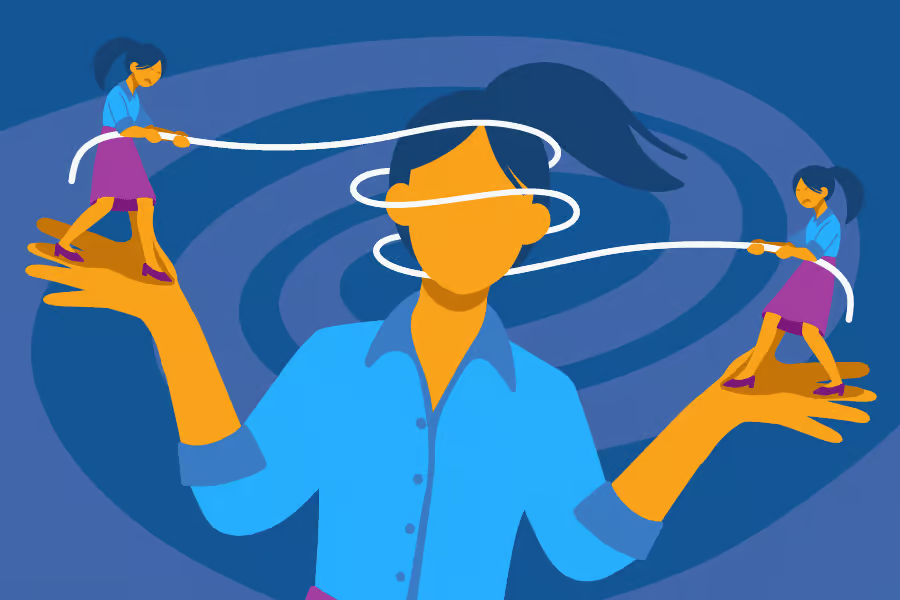
Relationships for someone with BPD are often characterized by a pattern called splitting — where people are viewed as either completely good or completely bad, with little room for the middle ground most relationships require. A person who was idealized yesterday can become despised today in response to a perceived slight or disappointment. This pattern makes lasting, stable relationships extremely difficult without treatment.
People with BPD often struggle with a chronic sense of emptiness and an unclear, shifting self-image. Values, goals, career aspirations, sexual identity, and personal beliefs can shift dramatically depending on who they are with or what situation they are in. This instability makes it difficult to maintain a consistent sense of who you are and what you want from life.
BPD frequently drives impulsive behaviors in at least two areas that are potentially self-damaging — including reckless spending, unsafe sex, substance abuse, binge eating, reckless driving, or abruptly quitting jobs or relationships. These behaviors often feel uncontrollable in the moment and are frequently followed by shame, regret, and a deepening cycle of emotional pain.
Recurrent self-harm, suicidal gestures, threats, or behavior is one of the most serious symptoms of BPD and one that demands immediate clinical attention. These behaviors are often triggered by fear of abandonment or interpersonal conflict and serve as a way to communicate emotional pain that feels impossible to express any other way. This symptom is not attention-seeking — it is a signal of profound distress that requires compassionate, specialized care.
People with BPD experience intense emotional episodes — ranging from profound anxiety to irritability to despair — that can shift dramatically within hours. Unlike bipolar disorder where mood cycles last weeks or months, BPD mood shifts are typically rapid and almost always triggered by interpersonal events. The emotional experience is real, overwhelming, and exhausting for both the person living with BPD and the people around them.
A persistent, gnawing sense of inner emptiness is one of the hallmark experiences of BPD — described by many as feeling hollow, numb, or like something fundamental is missing that cannot be named or filled. This chronic emptiness frequently drives the impulsive behaviors, substance use, and intense relationship patterns associated with BPD as the person searches for something — anything — to fill the void.
People with BPD often struggle to control intense anger — experiencing it more frequently, more intensely, and with less ability to de-escalate than people without the disorder. This anger is almost always triggered by perceived rejection or abandonment and can manifest as verbal outbursts, physical aggression, or deep, seething resentment that lingers long after the triggering event has passed.
During periods of extreme stress, people with BPD may experience dissociation — a feeling of detachment from themselves or reality — or brief paranoid thinking, particularly around the intentions of people they are close to. These episodes are typically short-lived and stress-induced, but they can be deeply disorienting and frightening for both the person experiencing them and the people who care about them.
If you recognized yourself in five or more of these descriptions — or even just two or three — that recognition matters and deserves professional attention. BPD is not a life sentence. It is a diagnosis with one of the most well-researched and effective treatment protocols in all of mental health — Dialectical Behavior Therapy (DBT) — and at My2Cents Recovery, it is a condition our clinical team treats every single day with skill, compassion, and genuine understanding of what living with BPD actually feels like from the inside.
The clinical criteria tell you what BPD is. These signs tell you what it feels like to live with it every single day.
Feeling emotions more intensely than others and for longer than feels reasonable
Rapid mood shifts triggered by something as small as a tone of voice or an unanswered text
Chronic inner emptiness — a persistent sense that something is missing that you cannot name or fill
Impulsive decisions made in emotional moments that you later regret — quitting jobs, ending relationships, spending, substances
Self-harm or self-destructive behavior as a way to manage emotional pain that feels unbearable
Intense shame spirals following emotional outbursts or perceived mistakes
Difficulty returning to emotional baseline after being triggered — staying activated long after others have moved on
Feeling fundamentally different from other people — like you are broken in a way they cannot understand
Idealizing people quickly — putting new friends, partners, or therapists on a pedestal immediately
Devaluing people just as fast — shifting from idealization to intense disappointment or anger over a perceived slight
Intense fear of being left — reading abandonment into situations where none was intended
Pushing people away to protect yourself from abandonment — then desperately wanting them back
Difficulty trusting others' intentions — constantly questioning whether people truly care or are about to leave
Feeling invisible or unseen in relationships despite craving deep connection above everything else
Conflict patterns that escalate quickly and leave everyone involved confused about what just happened
Struggling to maintain friendships long term despite genuinely wanting close, lasting relationships
What makes BPD particularly vulnerable to co-occurring substance abuse is the intensity of the emotional pain it produces — and how few tools most people with BPD have been given to manage it. When every emotion hits like a wave and there is no effective way to regulate it, substances become an understandable solution. Alcohol numbs the fear of abandonment for a few hours. Pills quiet the chronic emptiness. Cannabis takes the edge off the emotional hypervigilance that never fully turns off. Over time the substance use stops working as relief and begins creating new crises — layering addiction on top of an already overwhelming condition.
If you recognized yourself in multiple symptoms across both columns, you are not alone — and what you are experiencing has a name, a diagnosis, and a proven treatment path. At My2Cents Recovery, our clinical team identifies these patterns every day and builds treatment plans specifically designed for people living with BPD and co-occurring substance use. The first step is simply letting someone who understands finally hear what you have been carrying.
When emotional pain has no outlet and no treatment, substances become the only available relief — until they stop working and start destroying.
The connection between borderline personality disorder and substance abuse is one of the strongest co-occurring relationships in all of mental health treatment. Research consistently shows that between 50% and 70% of people diagnosed with BPD also meet the criteria for a substance use disorder at some point in their lives. That is not coincidence — it is a direct consequence of what untreated BPD feels like from the inside, and what happens when a person in that kind of pain is never given a better tool to manage it.
For someone living with BPD, emotions do not arrive in manageable waves — they arrive as floods. The fear of abandonment does not feel like worry — it feels like emergency. The chronic emptiness does not feel uncomfortable — it feels unbearable. And when that level of emotional intensity has no clinical treatment behind it, substances fill the gap with a speed and reliability that nothing else seems to match. Alcohol quiets the hypervigilance. Opioids soften the emotional pain. Stimulants fill the emptiness temporarily. Cannabis takes the edge off the constant internal noise.
What makes this cycle particularly dangerous for people with BPD is how quickly it escalates. The same impulsivity that is a core symptom of BPD also accelerates substance use from occasional relief into full dependency faster than it does for people without the disorder. The emotional dysregulation that drives the substance use also makes withdrawal harder to tolerate — because the discomfort of withdrawal hits a nervous system that was already operating without adequate coping tools before the substance use ever began.
There is also the shame cycle to consider. BPD already produces intense shame responses — the feeling of being fundamentally broken or unlovable that follows emotional outbursts or relationship ruptures. Substance use adds a new layer of shame on top of that. And shame, for someone with BPD, is not just an uncomfortable feeling — it is a trigger for the very behaviors the substances were meant to prevent. The cycle feeds itself in ways that make it nearly impossible to break without integrated, specialized clinical care.
At My2Cents Recovery, we understand this cycle from the inside out — and we treat it accordingly. From the very first assessment, our clinical team identifies the BPD, maps how it connects to the substance use, and builds an integrated treatment plan that addresses both simultaneously. We do not ask you to get sober before we treat the BPD. We do not treat the BPD and ignore the addiction. We treat the whole person — because that is the only way this works.
BPD does not plateau on its own — and the longer it goes without treatment, the deeper its reach into every area of life.
One of the most painful realities of borderline personality disorder is that without proper treatment, it rarely stays the same. The emotional intensity does not ease with time. The relationship patterns do not correct themselves through willpower or good intentions. The fear of abandonment does not fade simply because someone wants it to. What untreated BPD does instead is expand — quietly and consistently — until it has shaped every relationship, every career decision, every sense of self-worth a person has left.
The nervous system of someone with untreated BPD is in a near-constant state of threat response — scanning every interaction for signs of rejection, bracing for abandonment that may never come, and reacting to emotional triggers with an intensity that consistently produces consequences far greater than the situation warranted. Over time that pattern does not just affect the person with BPD — it affects every person who loves them, works with them, or tries to get close to them.
And then there is the substance use. For the significant majority of people with untreated BPD who turn to alcohol or drugs for relief, the consequences compound in ways that make both conditions harder to treat the longer they go unaddressed. Relationships that might have been salvageable become casualties of active addiction. Career trajectories that were already disrupted by BPD become impossible to maintain. Physical health declines. Legal consequences accumulate. And underneath all of it, the BPD that started everything remains completely untouched.
None of these outcomes are inevitable — but every one of them becomes significantly more likely the longer BPD goes without proper treatment. The good news is that BPD has one of the most researched and effective treatment protocols in all of mental health — and at My2Cents Recovery, that protocol is at the center of everything we do. No matter how long this has been going on or how many times something else has been tried, the right treatment changes everything. And it is never too late to start.
Escalating relationship instability — a pattern of intense, short-lived connections followed by devastating ruptures
Chronic unemployment or career instability driven by impulsive decisions and interpersonal conflict
Worsening substance dependency as emotional pain deepens and coping tools run out
Increased self-harm behaviors as a primary means of emotional regulation
Suicidal ideation and attempts — BPD carries one of the highest suicide attempt rates of any mental health diagnosis
Depression and anxiety layering on top of existing BPD symptoms as secondary conditions
Social isolation as relationships repeatedly collapse and the fear of trying again grows
Legal and financial consequences from impulsive behaviors and active addiction
Physical health decline from chronic stress, substance use, and self-neglect
If you or someone you love is experiencing thoughts of self-harm or suicide, please call or text 988 immediately — the Suicide & Crisis Lifeline is available 24 hours a day, 7 days a week.
DBT-informed, trauma-centered, and built around you — not a protocol designed for someone else.
Treating borderline personality disorder effectively requires more than good intentions and general therapy — it requires a clinical team that specializes in BPD, a treatment model built specifically for the emotional complexity BPD produces, and the clinical depth to address co-occurring substance use at the same time. At My2Cents Recovery, that is exactly what we offer. Our BPD treatment program is built around Dialectical Behavior Therapy — the gold standard, most rigorously researched treatment for borderline personality disorder — and delivered by a clinical team that understands what BPD actually feels like to live with, not just to diagnose.
Your treatment at My2Cents Recovery begins with a thorough clinical assessment that goes far beyond a standard intake evaluation. Our team identifies your specific BPD presentation — which symptoms are most dominant, how they connect to your substance use history, what trauma may be underlying both, and what has been tried before. We look at the full picture of your life — not just the diagnosis. By the time your assessment is complete, we have a precise clinical blueprint that guides every decision made about your care from that point forward.
No two people with BPD arrive with the same story — and no two treatment plans at My2Cents Recovery look the same. Your plan is built around your specific BPD presentation, your co-occurring substance use needs, your trauma history, and your personal recovery goals. It will draw from a combination of the following evidence-based therapies, each selected specifically because the research shows it works for BPD and co-occurring addiction:
Dialectical Behavior Therapy (DBT) — the gold standard treatment for BPD, specifically designed to build the four core skills most people with BPD were never taught: mindfulness, distress tolerance, emotional regulation, and interpersonal effectiveness
Cognitive Behavioral Therapy (CBT) — targets the thought patterns and core beliefs driving self-destructive behavior and emotional reactivity
Eye Movement Desensitization and Reprocessing (EMDR) — for BPD rooted in childhood trauma, EMDR processes the traumatic memories that continue to activate the nervous system’s threat response
Trauma-Informed Care — woven throughout every level of treatment, ensuring that every interaction with our clinical team honors the trauma history behind the BPD
Medication-Assisted Treatment (MAT) — when clinically appropriate, our psychiatry team may recommend medications to stabilize mood and reduce impulsivity while therapy takes root
Individual Therapy — dedicated one-on-one sessions with a licensed therapist who specializes in BPD and understands its complexity
Group DBT Skills Training — structured peer sessions focused on practicing the four DBT skill modules in real time alongside others who understand what BPD feels like from the inside
Family Therapy — because BPD affects every relationship in a person’s life, family therapy helps rebuild communication, establish boundaries, and repair the connections that BPD has strained
For clients whose BPD has led to substance dependency, treatment begins with medically supervised detox — keeping you physically safe and clinically supported through withdrawal while our mental health team simultaneously begins the work of addressing the BPD underneath. As your body stabilizes, DBT skills training deepens. As emotional regulation improves, the pull toward substances weakens. By the time you complete your program at My2Cents Recovery you leave with more than sobriety — you leave with a fundamentally different relationship with your own emotions, a set of DBT skills you will use for the rest of your life, and a continuing care plan designed to protect everything you have built in treatment long after you walk out the door.
BPD treatment is not about becoming a different person — it is about finally having the tools to be the person you have always been underneath the disorder. At My2Cents Recovery, that is the work we do every single day. Whether you are coming to us with a long history of BPD and addiction or you are only now beginning to understand what you have been living with, our team is ready to meet you exactly where you are — with the clinical expertise, the genuine compassion, and the unwavering belief that your recovery is absolutely possible.
Honest answers to the questions most people search for before they feel ready to ask for help.
Borderline personality disorder is a clinically recognized mental health condition characterized by intense emotional sensitivity, unstable relationships, an unclear or shifting sense of identity, and a profound fear of abandonment — real or perceived. It is classified in the DSM-5 under personality disorders and affects an estimated 1.6% to 5.9% of the general population. Despite how common it is, BPD remains one of the most underdiagnosed and misunderstood mental health conditions — frequently mistaken for bipolar disorder, depression, or simply dismissed as difficult behavior. A proper clinical assessment is the only reliable way to receive an accurate diagnosis and begin the right treatment.
No — BPD and bipolar disorder are two distinct conditions that share some surface similarities but have fundamentally different causes, patterns, and treatment needs. Bipolar disorder involves longer mood cycles — episodes of mania or hypomania lasting days to weeks, followed by depressive episodes — that are largely biological and not directly tied to interpersonal triggers. BPD mood shifts are typically rapid, intense, and almost always triggered by relationship events — a perceived rejection, an unanswered message, a fear of abandonment. BPD also involves identity instability, chronic emptiness, and splitting — features not present in bipolar disorder. Many people with BPD are misdiagnosed with bipolar disorder for years before receiving the correct diagnosis, which is why a thorough clinical assessment by a team that specializes in both conditions is critical.
Yes — and the connection is significantly stronger than most people realize. Research shows that between 50% and 70% of people diagnosed with BPD also develop a substance use disorder at some point in their lives. The emotional intensity of untreated BPD — the chronic emptiness, the fear of abandonment, the overwhelming mood swings — creates enormous pressure that substances temporarily relieve. The same impulsivity that is a core BPD symptom also accelerates substance use into dependency faster than it does for people without the disorder. At My2Cents Recovery, we treat BPD and co-occurring addiction simultaneously because addressing only one while leaving the other untreated is one of the leading causes of relapse we see in people who have tried treatment before.
Dialectical Behavior Therapy — DBT — is the gold standard, most rigorously researched treatment for borderline personality disorder and the therapeutic foundation of our BPD program at My2Cents Recovery. DBT was specifically developed for BPD by Dr. Marsha Linehan — herself a person with lived BPD experience — and is built around four core skill modules: mindfulness, distress tolerance, emotional regulation, and interpersonal effectiveness. These are the exact skills most people with BPD were never taught and most desperately need. Depending on the individual, treatment may also incorporate EMDR for trauma, CBT for thought patterns, and medication management — all coordinated by one unified clinical team.
Absolutely — and it is the only way we treat them. At My2Cents Recovery, integrated dual diagnosis treatment is not optional and it is not something that happens in phases. Every client who comes to us with co-occurring BPD and substance use disorder receives a unified treatment plan that addresses both conditions simultaneously, with the same clinical team, from day one. We understand that the BPD is almost always what is driving the substance use — and that treating the addiction without treating the BPD leaves the root cause completely untouched. Our integrated model is built on the clinical evidence that simultaneous treatment produces dramatically better long-term outcomes than treating each condition separately.
BPD is absolutely treatable — and the research on this is more encouraging than most people realize. With the right evidence-based treatment, particularly DBT, the majority of people with BPD experience dramatic symptom reduction. Multiple long-term studies have shown that a significant percentage of people who complete proper BPD treatment no longer meet the full diagnostic criteria for the disorder within several years. That does not mean BPD disappears overnight — but it does mean that with the right treatment, the emotional intensity decreases, relationships stabilize, impulsive behaviors reduce, and quality of life improves in ways that can feel almost unrecognizable compared to life before treatment. At My2Cents Recovery, we have seen this transformation happen — and we believe it is possible for every person who walks through our doors.
BPD is treatable. Recovery is real. And My2Cents Recovery is ready for you right now.
If you have read this far, something on this page spoke to something you have been carrying — possibly for a very long time. The intensity you feel is not a personal failing. The relationships that have fallen apart are not proof that you are unlovable. The substances you have used to survive the pain are not evidence that you are beyond help. They are all signs of a condition that was never properly identified, never properly treated, and never given the clinical attention it deserves.
At My2Cents Recovery, we have worked with people who have been told their whole lives that they were the problem — only to discover in treatment that they were living with an undiagnosed condition that explained everything. That moment of recognition changes people. And the treatment that follows — DBT skills, integrated care, a clinical team that genuinely understands BPD — changes them even further. Into someone who finally has the tools to live the life they always deserved.
Every call we answer comes with the same commitment — no judgment, no pressure, and complete confidentiality. You do not need to have a crisis to reach out. You do not need to have everything figured out before you call. You just need to make one decision — that today is the day you let someone who understands finally help. We will take it from there.
My2Cents Recovery is a fully confidential treatment facility. All communications are protected under HIPAA. Contacting us does not commit you to any program or obligation.
We use cookies to improve your experience on our site. By using our site, you consent to cookies.
Manage your cookie preferences below:
Essential cookies enable basic functions and are necessary for the proper function of the website.
These cookies are needed for adding comments on this website.
You can find more information in our Cookie Policy and .